



Support La Cotorra on Patreon
Access exclusive content, special perks, and closer connection with us.
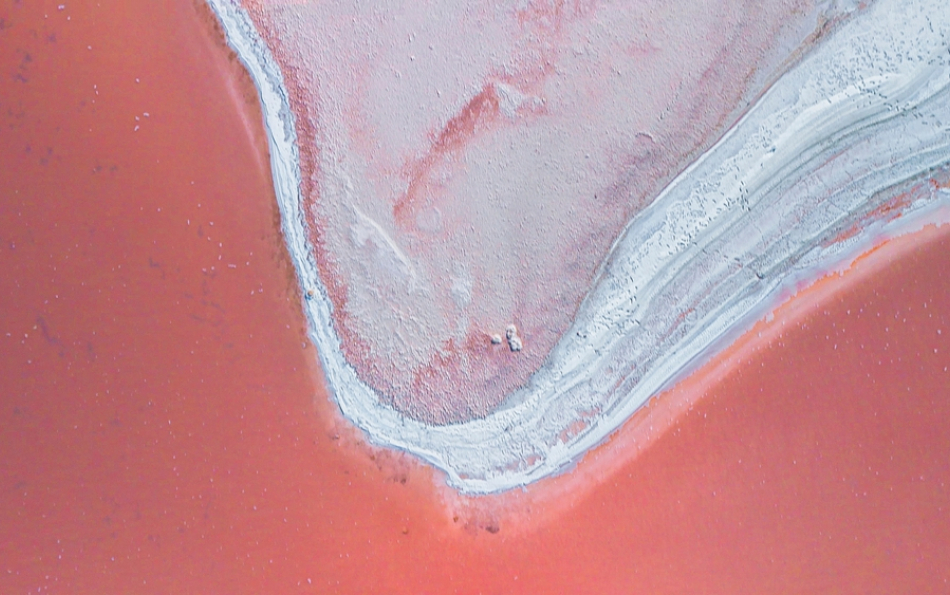
The pink lagoon in Torrevieja is one of the most recognisable natural sites on the Spanish coast. Thousands of people come here every year to see it, photograph it, and get as close as they possibly can. But there is one rule that hasn't changed in years: you cannot enter the water. Despite the comparisons with the Dead Sea, the lagoon remains off-limits to bathing.
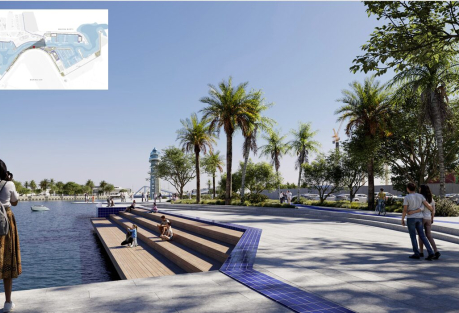
Plans to develop a resort area around Torrevieja's lagoon have been discussed since at least 2020. The original idea was to open a regulated bathing zone and build a thalassotherapy centre on the site of the former La Química industrial complex, next to the salt flats.
The project has since expanded to include wellness tourism, a science centre, and even a specialist hotel near the natural park. In 2024, the city council set up a "Laguna Rosa" working group involving scientists and hydrotherapy experts, and in 2026 the authorities returned to negotiations with the company Salins España over the final agreement to launch the project.
The idea is to open up access to the lagoon and create a bathing and thalassotherapy zone on its shore. The city council and Salins España are currently finalising the text of the agreement, on which the precise shape of the project will depend.
The plan involves creating a tourist zone on the site of the old La Química industrial complex — an area near the lakes where production facilities once stood. The project must reconcile an active salt operation, a resort infrastructure, and a protected nature reserve, taking into account the constraints and requirements of each. Put simply: salt extraction will continue, the natural environment will remain protected, and bathing will finally be possible — but in a separate, controlled zone.
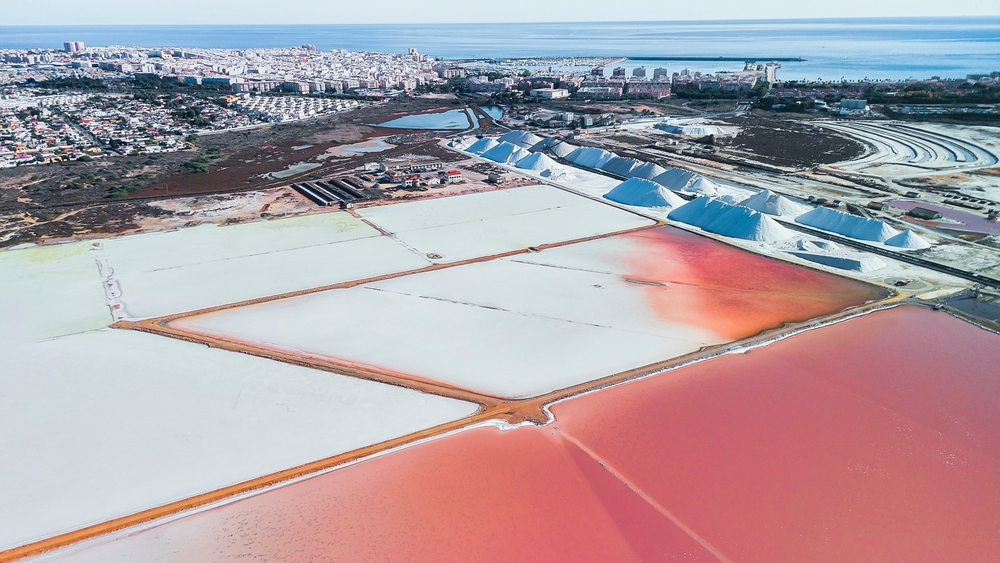
Torrevieja, a city in the Valencian Community, is well known far beyond Spain. It is a popular seaside resort with affordable housing that in recent years has become one of the most international cities in Spain: more than half of its residents are foreign nationals.
But tourists from around the world also come here for another reason — to visit the historic salt flats and the pink lagoon.
The city is known as "Europe's salt cellar," thanks to the scale of extraction and the role local salt has played in trade for centuries. Torrevieja's salt lagoons are not simply a natural deposit, but part of a complex production system. Seawater is first channelled into the La Mata lagoon, where it gradually evaporates and becomes more saline. It is then pumped into the Torrevieja lagoon, where the concentration reaches around 300–350 grams per litre — comparable to the salinity of the Dead Sea. At that density, water buoys up the body, and salt begins to crystallise and settle on the bottom — and that is the foundation of the extraction process.
In Torrevieja, salt is quite literally the city-defining industry. It crops up everywhere — even in the names of streets, residential complexes, schools, shops, beauty centres, and restaurants.
Specialist shops still operate in the city centre, run by local families across several generations. Especialidades Maciá is one of the city's oldest, having opened back in 1950. Here you can buy dozens of types of flavoured salt — from citrus to coffee — natural cosmetics, and an unusual local souvenir: a small salt boat, a nod to the city's export history.
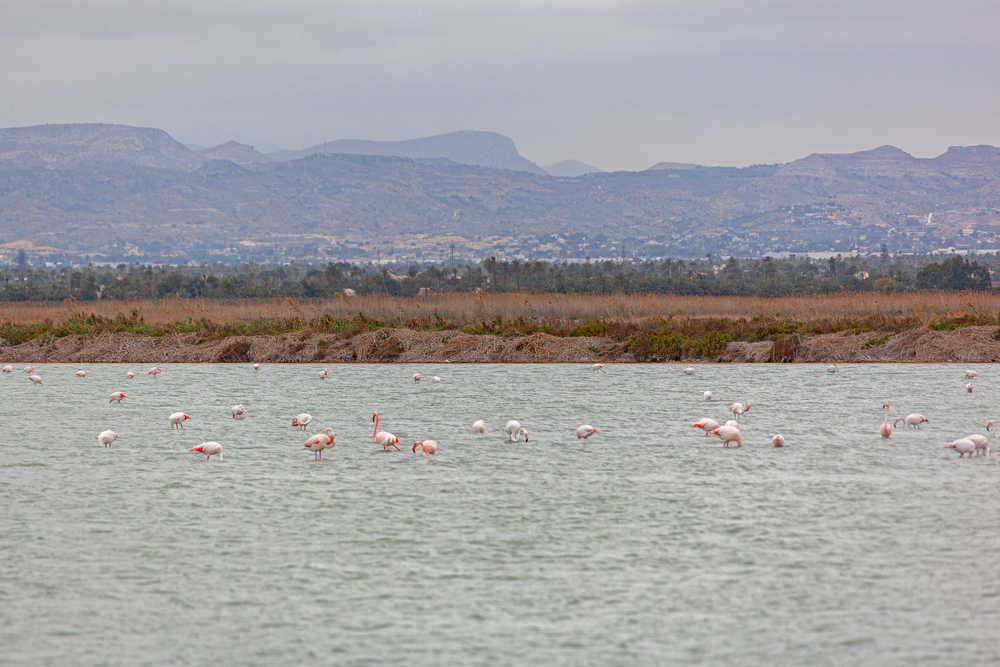
The lagoon's pink colour is the result of high salt concentration combined with the work of micro-organisms that produce pigment. The shade of the water shifts depending on temperature, light, and salinity — from a deep red to a pale pink. The water and silt are full of the organisms that flamingos feed on, so the birds turn up here regularly.
The pink lagoon is part of the Lagunas de La Mata y Torrevieja natural park — a protected area subject to strict visitor restrictions. Bathing is officially prohibited here, since any human interference can affect the lagoon's fragile ecosystem and the salinity of its water.
That is precisely why the future project does not involve opening the lagoon itself for free bathing. The plan is to create a separate resort zone next to the lake.
For now, the lagoon leads a double life: on the one hand, it is one of the most famous natural sites on the coast; on the other, it is a place around which an unofficial infrastructure of "insider" routes has built up over the years. People come here to walk, to take photographs, and to do shoots — especially at sunset, when the colour of the water deepens and the white salt deposits on the shore intensify the contrast.
In recent years, an unofficial map of viewpoints and trails has emerged around the lagoon. Local chats and social media groups regularly discuss the best places to park, where the views are most striking, and how to get closer to the water beyond the standard, paid tourist routes.
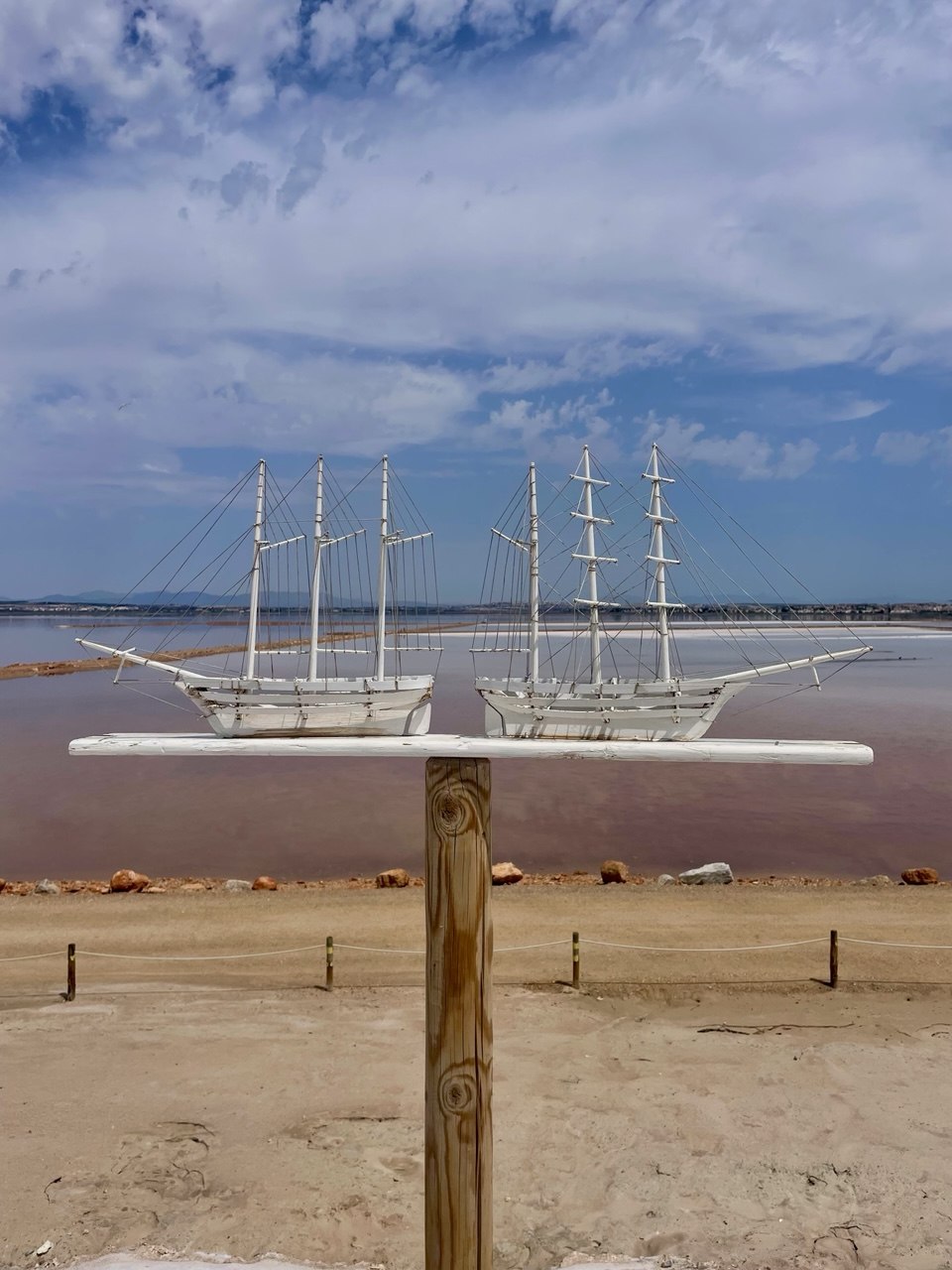
At present, the salt flats and the pink lagoon can only be visited via officially organised tours. A tourist train runs to the site every day from the centre of Torrevieja. An adult ticket costs €10.
The route takes visitors through the production area, with a look at the salt deposits, the extraction equipment, and the lagoon itself. There is a stop at a viewpoint where passengers can step out, take photographs, and admire the landscape. Visitors can also climb the salt mountain — one of the highlights of the route.
An excursion of this kind gives a clear sense of how salt is extracted, but lacks the central element — the chance to interact with the water itself, and to spend time there without a guide, a tour group, or a fixed schedule.
The resort project is now at a decisive stage: the city council and Salins España are finalising the text of the agreement that will determine exactly what form the bathing and thalassotherapy zone will take.
More than €11 million is to be allocated for the creation of the tourist centre. The project is not about building a new resort from scratch, but about converting an existing industrial site. The plan is to set up a thalassotherapy centre on its premises, with saltwater bathing, mud treatments, and visitor infrastructure.
The therapeutic potential of Torrevieja's water and salt muds is being studied at more than just the local level. Research by the University of Alicante, the Complutense University of Madrid, and the Carlos III University has shown that the lagoon's water and what are known as peloids (salt muds — ed. La Cotorra) can be used in therapeutic and cosmetic treatments. The lagoon's water contains salt, iodine, and other elements that may have positive effects on the skin, the respiratory system, and overall wellbeing.
Related Articles
Beyond Paella: Discovering All i Pebre, Valencia’s Best-Kept Culinary Secret
Deep in the heart of the Albufera wetlands, the fishing village of El Palmar preserves a traditional, rich garlic and wild eel stew that tourist traps completely miss
Loading…
Loading…