



Support La Cotorra on Patreon
Access exclusive content, special perks, and closer connection with us.
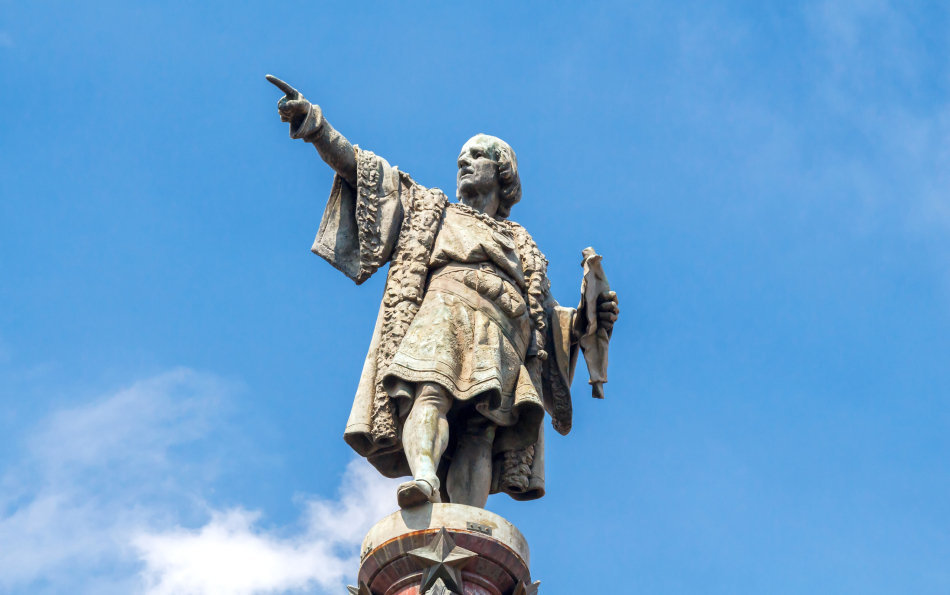
A new genetic study has presented the first data supporting the possibility that the famous navigator Christopher Columbus may have been Spanish, specifically originating from the Galician nobility. The research focuses on the Sotomayor lineage—one of the most influential families in northern Spain during the 15th century.
More than five centuries after the discovery of the Americas, the question of the explorer's origin remains open. The official version states that he was born in the Italian city of Genoa to a family of modest means, a sailor who convinced the Catholic Monarchs to finance his voyage. However, this hypothesis has long been a subject of debate among historians.
A research group from the Citogen laboratory and the Complutense University of Madrid studied the DNA of 12 individuals from the family tomb of the Counts of Gelves, where at least seven direct descendants of Columbus are buried. They discovered an unexpected match: two individuals were genetically linked despite having no documented kinship.
This led to the assumption of a common ancestor. A computer analysis of several generations pointed to the Galician nobleman Pedro Álvarez de Sotomayor, better known as Pedro Madruga. To test this, researchers applied a "virtual knockout" technique; when this specific ancestor was removed from the genealogical tree, the link between the two individuals disappeared. No other candidate yielded such a result.
The hypothesis that Columbus could have been Pedro Álvarez de Sotomayor (or his son) has been discussed for years based on circumstantial evidence. For instance, Madruga disappeared from historical records in 1486, the same year Columbus first appeared before the court of Isabella and Ferdinand. Furthermore, Columbus's writings contain linguistic structures characteristic of Galician-Portuguese, and his coat of arms features gold bands identical to those of the Sotomayor family.
However, the authors of the new study emphasise that the findings are not yet final. The work has not yet undergone peer review, and the analysis was conducted using the DNA of presumed descendants rather than Columbus himself. Meanwhile, other theories persist—such as research led by José Antonio Lorente at the University of Granada, which points toward potential Sephardic Jewish roots.
Related Articles
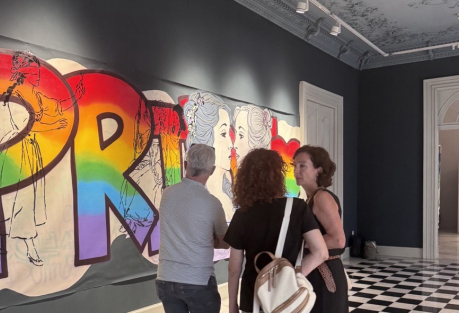
"Valencia Queer" Exhibition Opens at the City Museum Ahead of Gay Games 2026
Bringing together eight artists linked to Valencia, the show kicks off the cultural programme for the Gay Games — the first to be held in Spain — running 27 June to 5 July, as the city makes history
Loading…
Loading…