1
IES Lluís Vives
Carrer de Sant Pau 4
PAU 2024: 7.19, PAU 2025: 6.32.
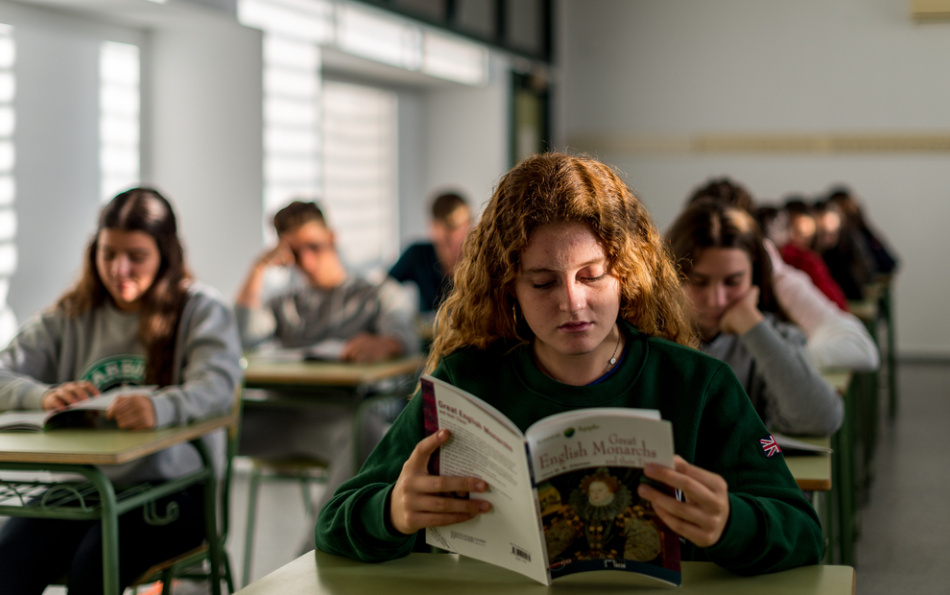
The first weeks in a Valencian school are almost always an enormous source of stress for a child who has emigrated. Lessons are taught in two languages simultaneously: Spanish and Valencian. A new environment, new rules, new classmates. And while the child is adapting, parents are only beginning to work out whether they chose the right school.
La Cotorra has previously covered in detail the main types of Valencian schools and the criteria for enrolling in them. In this guide, we identify the best schools in Valencia based on graduation scores and assessments from authoritative publications, and explain what educational programmes are available here.
The language question
In Spain, schools are assessed by several independent sources. Forbes España publishes an annual list of the top 100, ranked across 36 criteria — languages, infrastructure, international character, and extracurricular programmes. Reputable Spanish publications El Mundo and El Español also publish their own rankings. The large aggregator MiCole collects parent reviews. And the Conselleria de Educación, Valencia's regional education ministry, publishes official PAU statistics — the state school-leaving exam — annually on its website. La Cotorra has cross-referenced data from all these sources to bring you the best options, taking all factors into account.
State schools are a free option with a transparent enrolment system. Quality can range from average to very high — several IES (Instituto de Educación Secundaria, state secondary school — ed. La Cotorra) consistently rank among the region's top performers in the PAU, the local equivalent of a national university entrance exam.
The key thing to know: in a state school, a child will be taught in Spanish and Valencian. For children with no knowledge of either language, the first few months can be particularly challenging. That said, Valencia does have adaptation and language support programmes: dedicated Spanish language sessions with a specialist teacher for part of the school day, while the child gradually integrates into mainstream classes.
Out of more than 800 centres in the province, La Cotorra has selected those that consistently deliver strong results in the independent exam.
The city's oldest institution, founded in 1859, is housed in a building near the Estación del Norte. One of the most prominent state schools in the city. A rare offering for a state school: four bachillerato tracks, including Artes Plásticas and Artes Escénicas y Musicales — a level of choice almost unheard of in private or semi-private schools. For bachillerato, local residency is no longer a factor — places are awarded on the basis of grades, and many parents deliberately transfer their children here from across the city.
Carrer del Pare Méndez 151, Torrent (12 kilometres from the city centre)
PAU 2024: 7.28, PAU 2025: 6.15
This school in the suburban town of Torrent consistently ranks among the region's top performers in exam results — and it's free, with no competitive entry for residents. In 2024, it recorded the smallest gap between internal grades and the independent exam (0.08 points), meaning that school marks genuinely reflect real knowledge.
The only state school within the city to score above the provincial average in both years running. Located in the Cabanyal neighbourhood, close to the sea. One hundred per cent of graduates passed the PAU in 2025, out of 113 candidates.
Also worth considering: IES Henri Matisse (Paterna, PAU 6.62 / 6.32), IES de Massamagrell (Massamagrell, PAU 6.52 / 6.16), IES La Senda (Quart de Poblet, PAU 6.55 / 6.76), IES Comarcal (Burjassot, PAU 7.22 / 6.36), IES Bocairent (Bocairent, PAU 7.68 / 7.08 — the region's best result, but located 95 kilometres from Valencia).
These schools are typically run by a private organisation but funded by the state: tuition at the Infantil, Primaria, and ESO levels is free. It is worth noting, however, that Bachillerato — the final two years before university — is often fee-paying at many of these schools. Semi-private schools are almost always Catholic, which in most cases means one religious education class per week, though this can be replaced with an ethics class upon parental request, and most schools handle this without issue.
Carrer de Micer Mascó 5, Valencia
PAU 2024: 7.00 · PAU 2025: 6.29
MiCole: 4.5 (145 reviews)
The only school in Valencia with an officially stated language support programme for foreign pupils. Founded in 1954, it has held the status of Centro de Integración — recognised by the Conselleria de Educación — since 2000. The gap between internal grades and the independent PAU is the smallest on this list. At the bachillerato level, it offers a rare option: Bachibac — a dual Franco-Spanish diploma.
Languages of instruction: Spanish, Valencian, English, German.
Carrer de Micer Mascó 1, Valencia
PAU 2024: 6.80 · PAU 2025: 6.45
MiCole: 4.7 (81 reviews)
The highest parent rating on our list — 4.7/5. Around 5% of pupils are foreign nationals: a small figure, but one documented by the school itself. The school's language institute prepares pupils for Cambridge and Trinity exams. Bachillerato Dual offers an American diploma alongside the Spanish qualification.
Languages of instruction: Spanish, Valencian, English, German.
Carrer de Guillem de Castro 35, Valencia
PAU 2024: 6.93 · PAU 2025: 6.88
MiCole: 4.0 (91 reviews)
The best PAU result among semi-private schools within the city in 2025 — and with 113 graduates, this feels like a reliable indicator of teaching quality rather than a single lucky cohort. Families who transferred children mid-year note a warm welcome and support with settling in. The school participates in Erasmus+ and regularly hosts foreign teachers. There is a noticeable religious dimension — the Marianists, a monastic congregation, live on the school premises.
Languages of instruction: Spanish, Valencian, English.
Avenida de la Plata 10, Valencia
PAU 2024: 6.77 · PAU 2025: 6.25
MiCole: 4.3 (121 reviews)
One of the highest ratings among urban semi-private schools. Reviews describe it as "a second home," and former pupils bring their own children here. The Salesian philosophy is built on accepting every child, without pressure or filtering.
Languages of instruction: Spanish, Valencian, English.
Carrer Rocafort 2, Godella
PAU 2024: 7.06 · PAU 2025: 6.74
MiCole: 4.2 (39 reviews)
The only suburban school in this top selection. Consistent PAU results, a minimal gap with internal grades, Cambridge preparation, Erasmus+, and a 14,000 m² campus with a climbing wall. The pupil-to-teacher ratio is 13 to 1. For a family living in Godella, or willing to make the journey, this is one of the most reliable options outside the city.
Languages of instruction: Spanish, Valencian, English, French, German.
Listed among the best schools by both El Mundo and Forbes. Seven languages, including Chinese, and accredited by Cambridge University as an examination centre since 1990. Three things worth knowing in advance: the school is girls-only, has historical ties to Opus Dei, and places considerable emphasis on religious education. There is a waiting list of up to two years, and real costs run from €200 per month upwards. For a family looking for a strong academic option for their daughter and comfortable with these conditions, Guadalaviar is an excellent choice.
Languages of instruction: Spanish, English, Valencian; the school additionally offers French, German, and Chinese within separate programmes.
The province's private schools fall into two types. The first follows the Spanish curriculum and prepares pupils for the PAU. The second follows the standards of other countries and awards international qualifications that open the door to universities worldwide.
Urb. Mas Camarena, Bétera
El Mundo 2025 #2 · Forbes 2025
PAU 2024: 7.05; PAU 2025: 6.43
The best private school in the Valencian Community, according to El Mundo—,ranking second among all private schools in Spain in 2025. The only school in Valencia offering all four IB Continuum programmes, from Infantil through to Bachillerato. An international community of 32 nationalities, with a residence for foreign students. Strengths include academic results, the scale of its facilities, and experience with international families. Some parents, however, report that real costs exceed stated figures and that the workload is high.
Cost: €300–700 per month, though often reaching €1,000. Matriculation is paid separately. Enrolment is handled through the school's own platform.
Languages of instruction: Spanish, English, and Valencian.
Avenida Seminario s/n, Moncada
El Mundo top 100
Listed as innovative by El Español
PAU 2024: 7.08; PAU 2025: 6.49
Over 50 years within the CEU system, one of Spain's largest private education networks. A Catholic school with a pronounced religious ethos, and consistently strong PAU results with a 100% pass rate over the past two years. Three bachillerato tracks are available: Nacional, IB Diploma, and Bachillerato Dual with an American diploma.
Cost: Please enquire directly with the school.
Languages of instruction: Spanish, English.
Avenida Daniel Comboni 7, Moncada
Forbes 2025
MiCole #20 in Spain in 2024
PAU 2024: 6.94; PAU 2025: 6.84
A Cambridge International School: from age 5 to 16, more than 50% of subjects are taught in English, with the option to earn the British IGCSE. A maximum of two classes per year group — a small Catholic school with a personal approach. Part of the Legionarios de Cristo network, with a genuine and tangible religious dimension.
Cost: Please enquire directly with the school.
Languages of instruction: Spanish, English (50%+), French.
All seven schools below operate according to a foreign standard. They do not sit the PAU, so if a pupil plans to enter a Spanish university, they can do so via the separate PCE exam; for universities abroad, they apply directly with their diploma. The primary language of instruction is the relevant foreign language. Schools carry out various assessments at the point of enrolment, including language proficiency tests.
Urb. El Plantío, Puçol (20 minutes north of Valencia)
Forbes 2025
El Español (international schools)
BSO "Excellent", also accredited by NABSS
The most well-known British school in the province, founded in 1987 and the first in the region to receive BSO Excellent status from the British Ofsted inspectorate. Pupils from more than 30 countries, with a boarding house for international students. A strong pastoral and educational psychology department. The main potential drawback is location: the school requires transport or boarding arrangements.
Cost: €6,000–12,000 per year.
Languages of instruction: English (primary), Spanish.
Calle Profesorado Español 1, Rocafort
Forbes 2025
The first school in Spain to hold both BSO and NABSS accreditation simultaneously
A secular school following a fully British curriculum. Fees are spread across 10 monthly payments, which include meals and learning materials.
Cost: please check the website — fees are published annually.
Languages of instruction: English (primary), Spanish.
The only British school within the city limits. Founded in 1992, part of the Cognita Schools network. Dual accreditation: A-Levels and the Spanish Bachillerato can be taken concurrently.
Cost: matriculation €3,250 (€1,600 for siblings of current pupils); for full fee details, see the official website.
Languages of instruction: English (primary), Spanish.
Avenida Sierra Calderona 29, Urb. Los Monasterios, Puçol
El Español 2025 (international schools)
The only American school in the province. Follows the Common Core curriculum and awards the American High School Diploma. Also offers the IB Diploma Programme.
Cost: over €700 per month according to MiCole reviews; please enquire directly with the school.
Languages of instruction: English (primary), Spanish.
A rare combination among international schools: British and Spanish curricula running side by side. The majority of teachers are native English speakers. The school is an active participant in the educational projects STARTinnova and Up! Steam.
Cost: over €700 per month according to MiCole reviews; please enquire directly with the school.
Languages of instruction: English (80% of subjects), Spanish.
Founded in 1889, one of the oldest foreign schools in Spain. Part of the AEFE network, the French state system of schools abroad, comprising around 500 schools in 135 countries. The lycée is secular and co-educational. The diploma awarded is the French Baccalauréat. Graduates speak three languages: French, Spanish, and English, with German and Valencian as optional additions. Ideal for families planning to apply to French or French-speaking universities. Enrolment is through the EDUKA platform, on a first-come, first-served basis.
Cost: €300–700 per month according to MiCole reviews; please enquire directly with the school.
Languages of instruction: French (primary), Spanish, English.
A German school in the city centre. Awards both the German Abitur and the Spanish Bachillerato concurrently. The teaching staff are qualified German and Spanish specialists. For families with German roots, or those with their sights set on German universities, this is the only option in the province.
Cost: €300–700 per month according to MiCole reviews; please enquire directly with the school.
Languages of instruction: German (primary), Spanish, English.
Related Articles
Emigrating with Kids: A Child Psychologist on Choosing Schools And Helping Teens Adapt
How do you pick a school after moving abroad? Do children really adapt so easily? La Cotorra asked child psychologist Svetlana Pron about everything from "I'm not going!" tantrums to bullying and withdrawn teenagers
A Venezuelan Web Designer Built a Free Coworking for Valencia's Women Freelancers
Every Friday in a Sabadell bank office, up to ten women gather to work side by side. Founded by Venezuelan web designer Patricia Ordóñez, House of Freelancers has grown into a community with its own summit
Loading…
Loading…