







Support La Cotorra on Patreon
Access exclusive content, special perks, and closer connection with us.
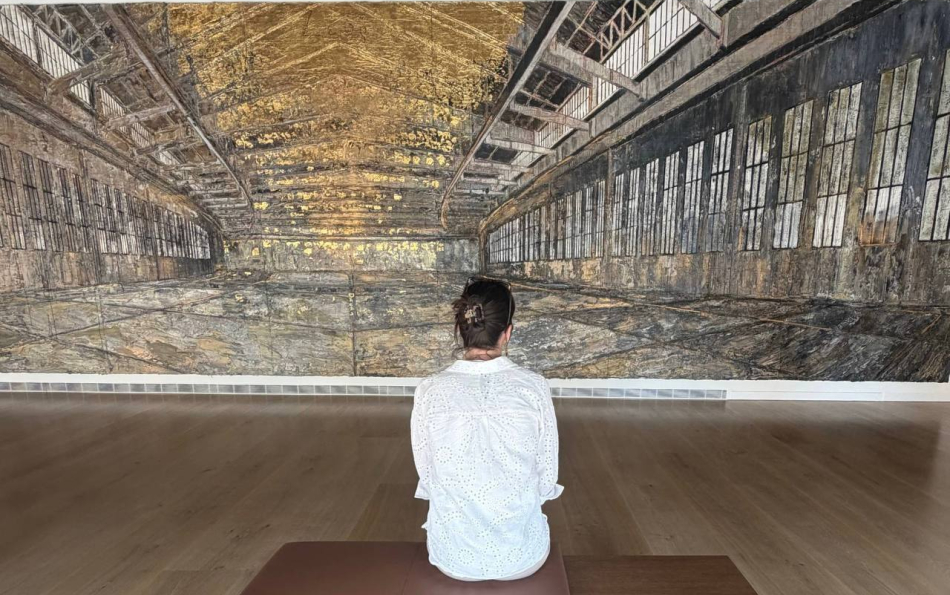
A premiere that the finest museums of Paris, London and Berlin might have envied has arrived in Valencia: Danaë, a monumental work by one of Europe's most discussed artists, is now on display at the Centro de Arte Hortensia Herrero. La Cotorra explores the artist's significance and his place within contemporary art.
From 29 April to 25 October 2026, the Hortensia Herrero Art Centre is presenting one of Europe's major exhibitions of the year: eleven works by the German artist Anselm Kiefer, four of which were created specifically for the Valencia exhibition and are now part of the museum's permanent collection.
The exhibition's principal attraction is the European premiere of Danaë. This work by Anselm Kiefer was first unveiled to the public in 2022 in New York (Gagosian gallery). Kiefer's Danaë measures more than thirteen metres in length. The work occupies a gallery of its own.
"How did you even get it in here?" we ask the museum attendants. Evidently, it is a question they hear often. "Through the windows, in sections, using a specialised lifting system. The challenge was that the artist insists on transporting his works without crates or packaging. He considers his paintings living objects, and any damage sustained in transit a natural part of their existence. It certainly added to the museum staff's stress levels," says one attendant, who preferred to remain anonymous.
What might seem like a contemporary artist's pose is entirely consistent with the worldview of Anselm Kiefer, who is fascinated by alchemy and the idea of "transforming lead into gold." The stability of materials is not among the things that interest him: he uses toxic, oxidising lead for his famous books, which look like documents of an apocalypse. An interest in decay, corrosion, ruins, and, consequently, the transition to higher forms of existence runs throughout Kiefer's work.
Anselm Kiefer was born under bombardment in the cellar of a hospital in the German city of Donaueschingen (the Black Forest) on 8 March 1945. On the same day, an Allied bomb struck his family home. One of the artist's most frequently quoted remarks is: "My biography is the biography of Germany."
Refusing to separate himself from Germany's painful and guilt-laden past, the artist builds his artistic narrative on the ruins of history, on classical myths, literature, and architecture. Kiefer stresses that he does not allow history to be "swept under the carpet," and again and again recalls the most shameful pages in Germany's life. The complex and metaphorical form in which he embodies his reflection on the country's metamorphoses from Nazism to the present provokes scandals, resistance, and criticism among some viewers. But none of this stops Anselm Kiefer.
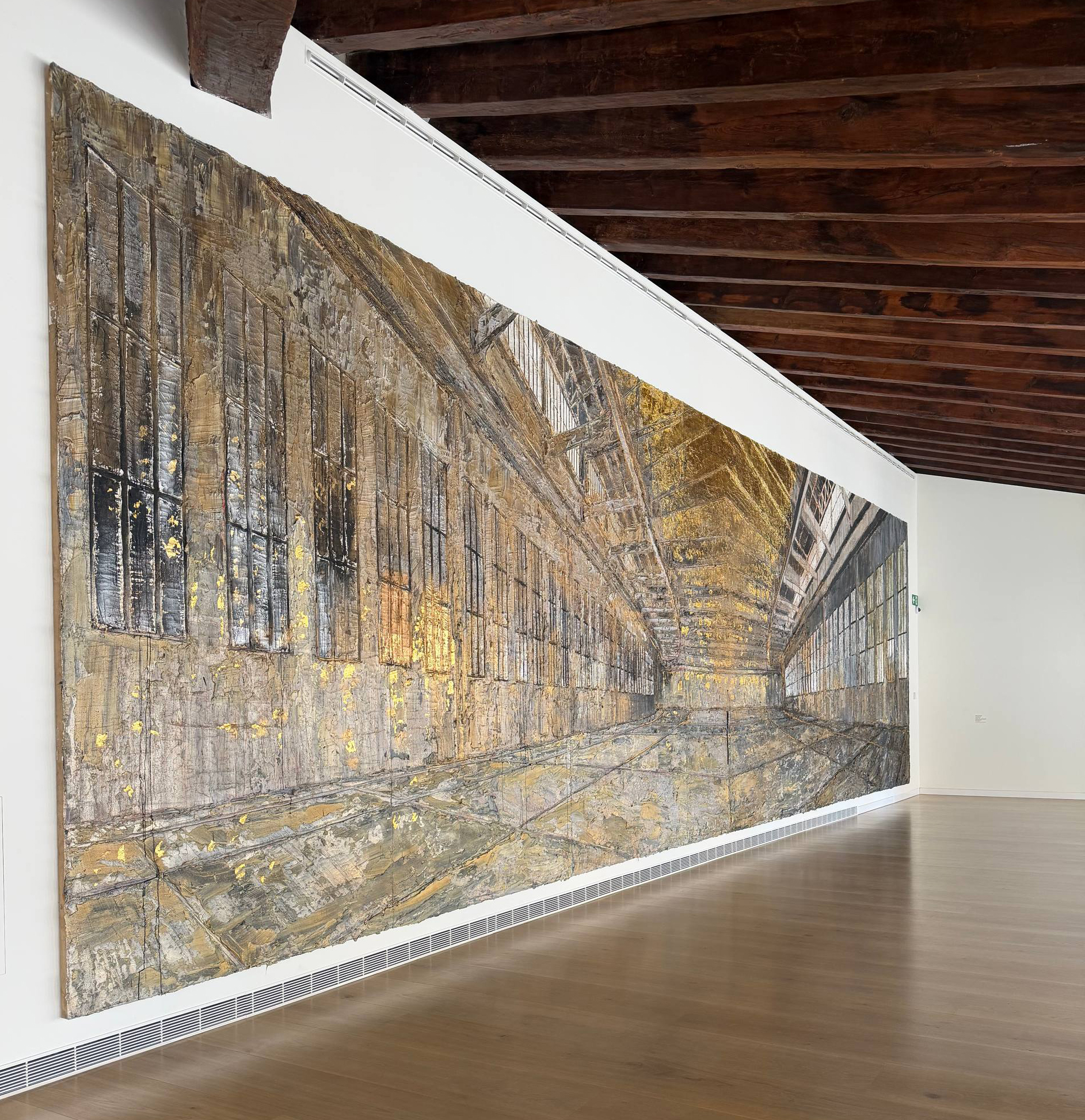
Unlike many celebrated interpretations of the Danaë myth — by Titian, Rembrandt, or Klimt, for example — Anselm Kiefer's version has no female figure. It is replaced by a vessel of time: the interior of Berlin's Tempelhof Airport, drenched in a shower of gold. One of Germany's earliest civilian airports, Tempelhof was comprehensively rebuilt by the Nazis between 1936 and 1941 to designs by Ernst Sagebiel. Covering 284,000 square metres, the terminal became the largest building in the world and was conceived as a central element of Hitler's projected "World Capital." The British architect Norman Foster called it "the mother of all airports."
In April 1945, the airport was captured by Soviet forces. But by 1948, it had acquired a new significance for Germany. During the Soviet blockade of West Berlin, when the supply of electricity and food to part of the city was cut off, air transport became the only means of delivering food to the blockaded zones. The American and British air forces organised the "Airlift," at times dropping sweets and toys from the air, which earned their sorties the nickname "raisin bombers." The blockade lasted for a year.
The golden rain — a symbol of fertility, of life itself, of divine intervention in human affairs — pours through the ceiling of Tempelhof onto the airport's concrete walls and floor in Anselm Kiefer's Danaë. In this way, the building becomes a witness to history — to its worst, its most terrible, its constantly changing scenes. The myth of Danaë, imprisoned in a tower by her father, acquires a new reading.
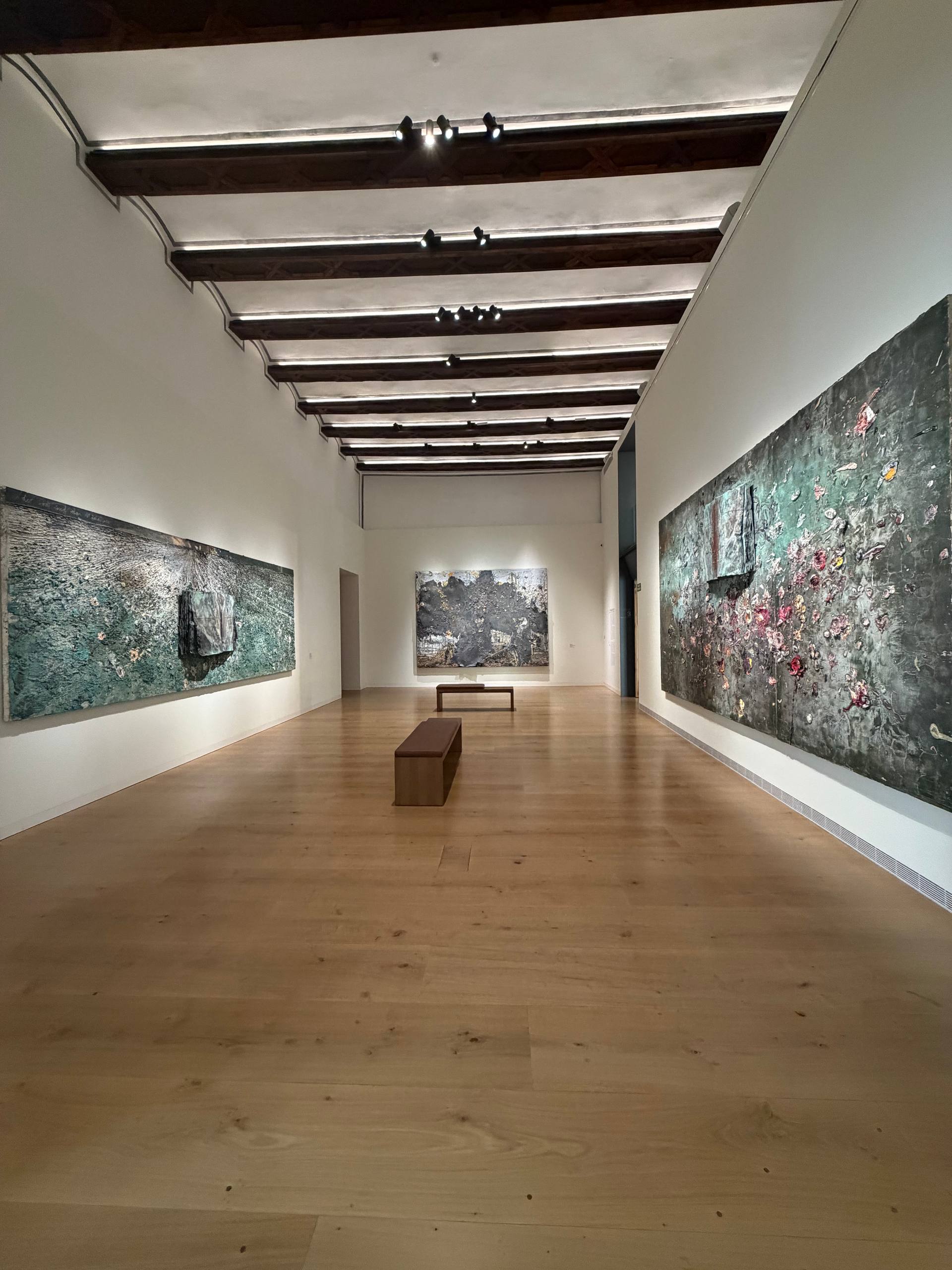
Kiefer's works are built upon a dense network of literary, historical, and mythological references, and require the viewer to be familiar with classical and Norse myths, Baudelaire's Flowers of Evil, Wagner's Ring of the Nibelung, and the basic concepts of alchemy. It is hardly surprising that both his approach to art and the subjects Kiefer fearlessly addresses provoke debate in the art world. The critic and poet John Yau, in his article "You Cannot Coat the Holocaust with Gold," directly questioned Kiefer's very method. He writes that the artist has spent decades working with the Holocaust, Nazism, and Germany's historical trauma, using gold, gigantic scale, and elevated symbolism, and asks whether historical catastrophe risks becoming an aesthetic spectacle.
On the other hand, Roger Cohen (The New York Times) travelled to the artist's studios in France and described Kiefer as a man within whom German history itself lives — from its ancient myths to Kabbalah and alchemy — while the unsettled ghosts of the past wander around the artist and his work. The journalist called confrontation with history in all its ugliness an important and necessary part of working through trauma. Roger Cohen considers the artist's central question to be the following: What is a German to do who grew up amid the ruins of a tragedy he did not himself commit?
By a terrible coincidence, that question remains relevant even now.
On 17 June at 6:30 PM, the Hortensia Herrero Art Centre will screen a documentary about Anselm Kiefer by director Wim Wenders, known to mass audiences for the film "Wings of Desire." Tickets for the event can be reserved here.
Related Articles
Win a €180,000 House in Málaga for Just €10: Architecture Studio Launches Unique Real Estate Raffle
Arkipromo is raffling off two brand-new three-bedroom homes in Cuevas del Becerro, complete with €20,000 furniture vouchers for the winners
Loading…
Loading…