


Support La Cotorra on Patreon
Access exclusive content, special perks, and closer connection with us.
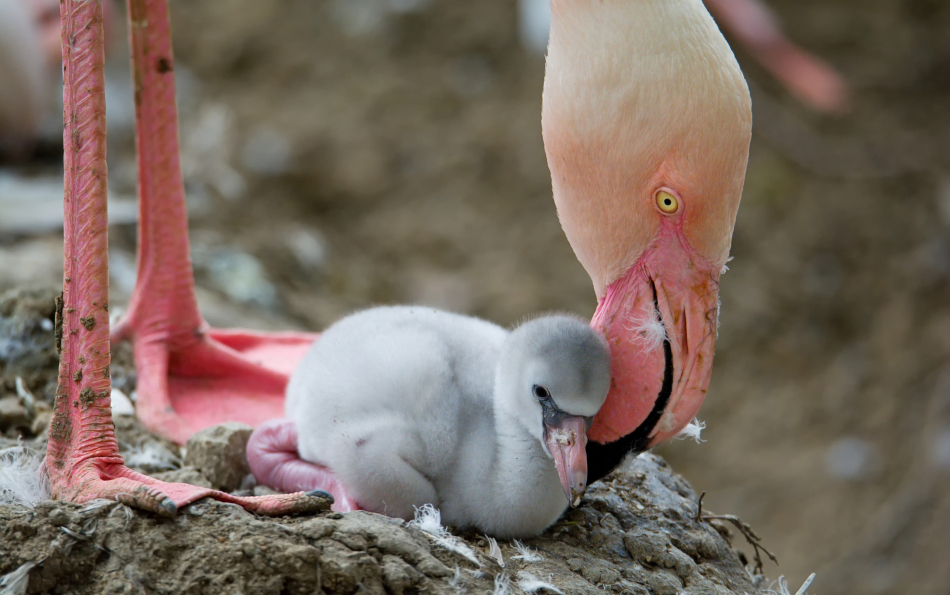
The first flamingo chicks of the year have hatched at the Lagunas de La Mata y Torrevieja natural park in the south of Alicante. Photographs of the birds in their first days of life were taken by Federico Kenzelmann, a salt mine worker and wildlife photographer. In his estimate, between 14,000 and 18,000 individuals are nesting at the Torrevieja lagoon this season.
Flamingos first nested at the Torrevieja lagoon in 2020, at the height of the pandemic, to the surprise of scientists and residents alike. In just six years, the colony has grown into one of the largest on the Iberian Peninsula, on a par with Fuente de Piedra in Málaga, Doñana, the Ebro Delta, the Gallocanta lagoons, and the Petrola lagoon in Albacete.
The flamingos use an artificial structure — a dyke dividing the salt lagoon in two — to build and maintain their clay nests. Vessels and extraction machinery pass close by, but the birds have long since grown accustomed to the activity and pay it no attention. The salt works, for its part, actively promotes the birds' presence as a tourism draw.
During the breeding season, each pair of flamingos lays a single egg and incubates it for 26 to 32 days. Chicks hatch covered in grey down and are entirely dependent on their parents for the first few weeks. Their plumage develops over 65 to 90 days, but flamingos only acquire the characteristic pink colouring of adults at around four years of age, and typically begin breeding at five or six.
The park extends across the municipalities of Torrevieja, Guardamar del Segura, Los Montesinos, and Rojales, and together with the El Hondo reserve and the Salinas de Santa Pola forms a triangle of internationally significant wetlands. Biologists stress the importance of not disturbing the birds during the breeding season and strongly advise against approaching them under any circumstances.
La Cotorra has previously written in detail about the popular pink lagoon in Torrevieja and the plans to create a resort zone around it.
Related Articles
Beyond Paella: Discovering All i Pebre, Valencia’s Best-Kept Culinary Secret
Deep in the heart of the Albufera wetlands, the fishing village of El Palmar preserves a traditional, rich garlic and wild eel stew that tourist traps completely miss
Loading…
Loading…