







Support La Cotorra on Patreon
Access exclusive content, special perks, and closer connection with us.
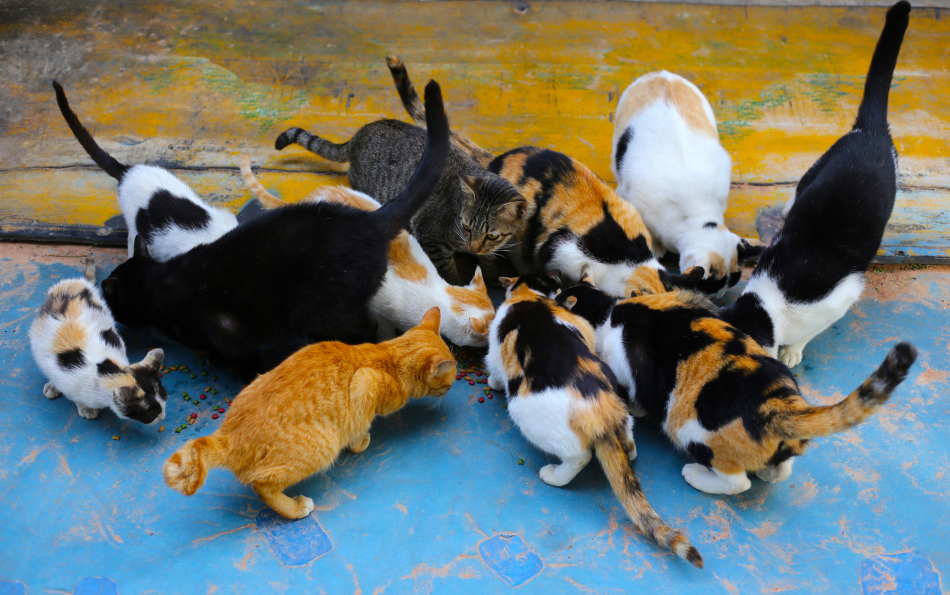
The Animal Welfare Law (Ley 7/2023) came into force back in 2023, yet many residents of Spain are still unaware of some of its key requirements. One of the most discussed points concerns the rules around feeding stray cats. An important clarification: the law does not ban feeding street cats outright. It sets out who may do so and how. Breaching these rules can result in serious penalties.
Under Articles 40 and 41 of the law, responsibility for caring for stray cats now lies with local councils. Article 40 places local authorities under a duty to plan, control animal numbers, cooperate with animal protection organisations, train volunteers, and develop programmes. Article 41, in turn, defines the responsibilities of citizens — to respect animals and to follow the rules governing the use of feeding stations and shelters within colony management programmes.
The primary tool for managing colonies is the TNR method — "trap, neuter, return." Neutering stops the colony from growing, and returning the cats to their original location prevents other animals from quickly moving into a space vacated after a colony is removed. The law explicitly prohibits the elimination of cat colonies, except where justified on health or technical grounds.
Feeding cats within these programmes may only be carried out by accredited volunteers or representatives of organisations that have completed the relevant training. In many municipalities, only dry food is permitted — wet food and scraps are banned — and volunteers must keep feeding stations clean and remove any containers or waste that could attract insects, rats, or other animals. Volunteers are also required to report the arrival of new animals in the colonies.
It is worth understanding that the restrictions exist not only to protect animals. Abandoned food attracts rodents, causes unpleasant smells, dirties the streets, and leads to disputes between neighbours. Uncontrolled feeding can also harm the cats themselves — it can lead to overcrowding, fighting, the spread of disease, and the growth of unneutered colonies.
Fines are divided into three levels depending on the severity of the breach: minor — from €500 to €10,000; serious — from €10,001 to €50,000; and very serious — up to €200,000. The specific penalty is determined by the local authorities taking the circumstances into account.
Those wishing to help stray cats are advised first to find out whether their municipality has an official cat colony management programme, and if so to obtain accredited volunteer status or join an authorised organisation. This allows people to help the animals without breaking the law.
Valencia is home to around 22,000 stray cats in more than 600 colonies. The city recently opened Spain's first veterinary centre dedicated entirely to the neutering of street cats.
Related Articles
Beyond Paella: Discovering All i Pebre, Valencia’s Best-Kept Culinary Secret
Deep in the heart of the Albufera wetlands, the fishing village of El Palmar preserves a traditional, rich garlic and wild eel stew that tourist traps completely miss
Loading…
Loading…