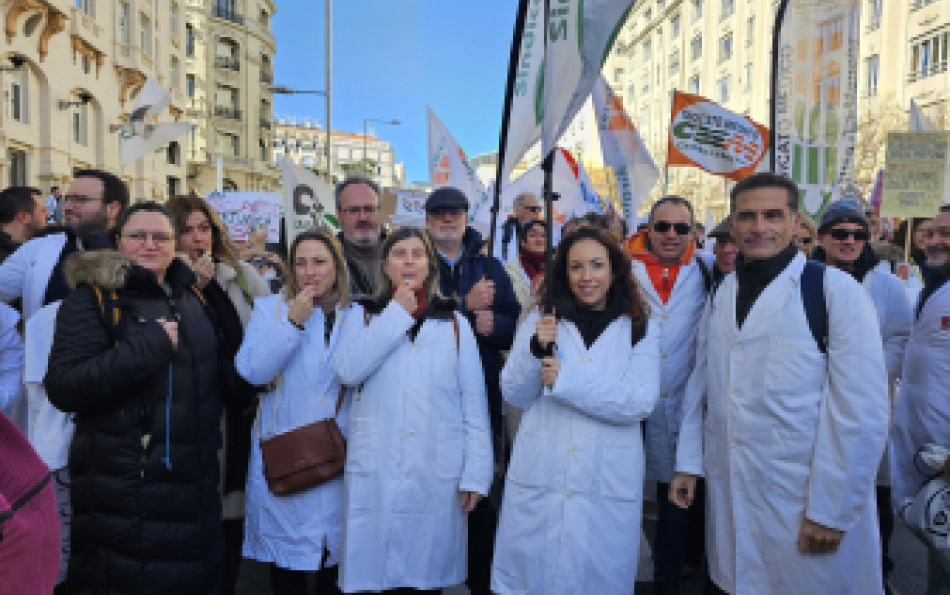
Another nationwide doctors’ strike has been taking place in Spain. Doctors protest against the proposed Framework Statute. The document, which still requires parliamentary approval, defines working conditions for all staff in the public healthcare system. More than 210,000 doctors across the country are taking part in the demonstrations.
From early morning, doctors gathered outside hospitals and health centres in regions including Madrid, Andalusia, Catalonia, Valencia, the Basque Country, Galicia and other autonomous communities. In Madrid, protesters outside Hospital Gregorio Marañón chanted slogans: “We want to treat patients without getting sick ourselves” and “We want to work like everyone else”.
In January, the Ministry of Health signed a draft agreement with the unions involved in negotiations (CSIF, SATSE-FSES, FSS-CCOO and UGT). The new protests, however, are being organised by the Strike Committee.
Among the key demands are the creation of a separate statute and a negotiating organ exclusively for doctors; a clearer division of professional groups based on training and responsibility; pay rises; the introduction of a 35-hour working week with morning shifts on weekdays; and payments for additional hours.
Doctors are also calling for early retirement and a ban on forced transfers between hospitals. The Strike Committee argues that the Framework Statute agreed between the Ministry and the major unions fails to reflect the specific nature of the medical profession.
The first phase of the strike runs from 08:00 on 16 February until 08:00 on 21 February. Further monthly stoppages have been announced for 16–20 March, 27–30 April, 18–22 May and 15–19 June if the Ministry of Health does not make concessions.
Health Minister Mónica García has said there will be no additional concessions from her side. “As minister, I must oversee the entire National Health System and draft a framework law for all professionals. There is a specific chapter for doctors that includes their main demands: fewer on-call shifts, reduced working hours, guaranteed rest periods and a better work–life balance. Everything that has caused dissatisfaction for years is included in the text,” she said.
For patients, the strikes may lead to delays in scheduled appointments, tests and non-urgent procedures. However, 100% of standard services are guaranteed on Sundays and public holidays, including diagnostic tests and emergency care.