



Support La Cotorra on Patreon
Access exclusive content, special perks, and closer connection with us.
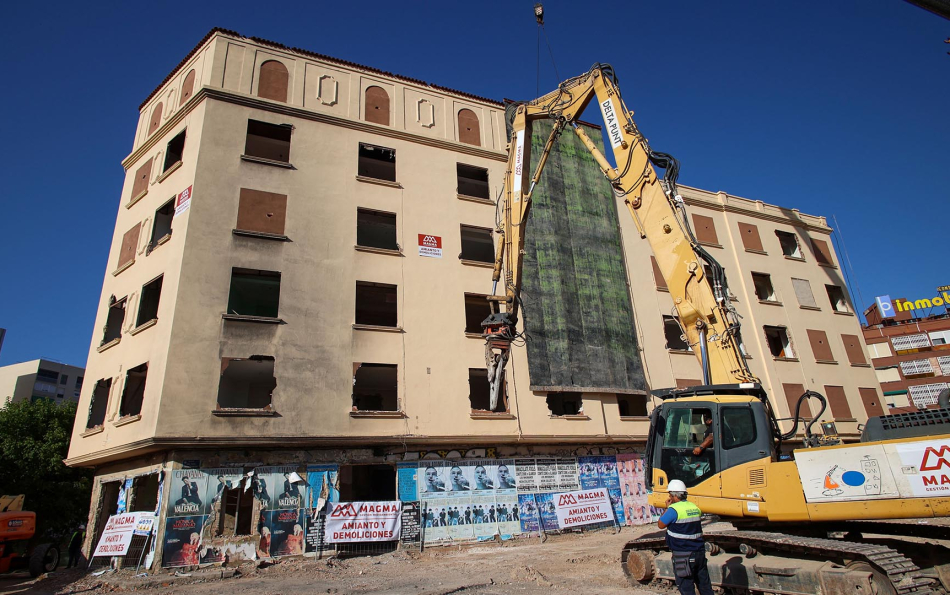
On 16 June, Valencia city council began demolishing an abandoned building in the Campanar district, which residents had nicknamed "Chernobyl" because of its extremely dilapidated state. The building is located between Pare Doménech and Pare Diego Mirón streets, next to the Pío XII avenue — one of the main entrances to the city from the north-west.
The mayor of Valencia, María José Catalá, who was present at the start of the works, called the day a historic one for Campanar. In her words, the city is "repaying a long-standing debt" to the district after almost four decades of degradation at this spot.
The building was taken out of service 38 years ago, when it fell outside the city's General Plan. Formally, this condemned the building to demolition, but the works have only begun now.
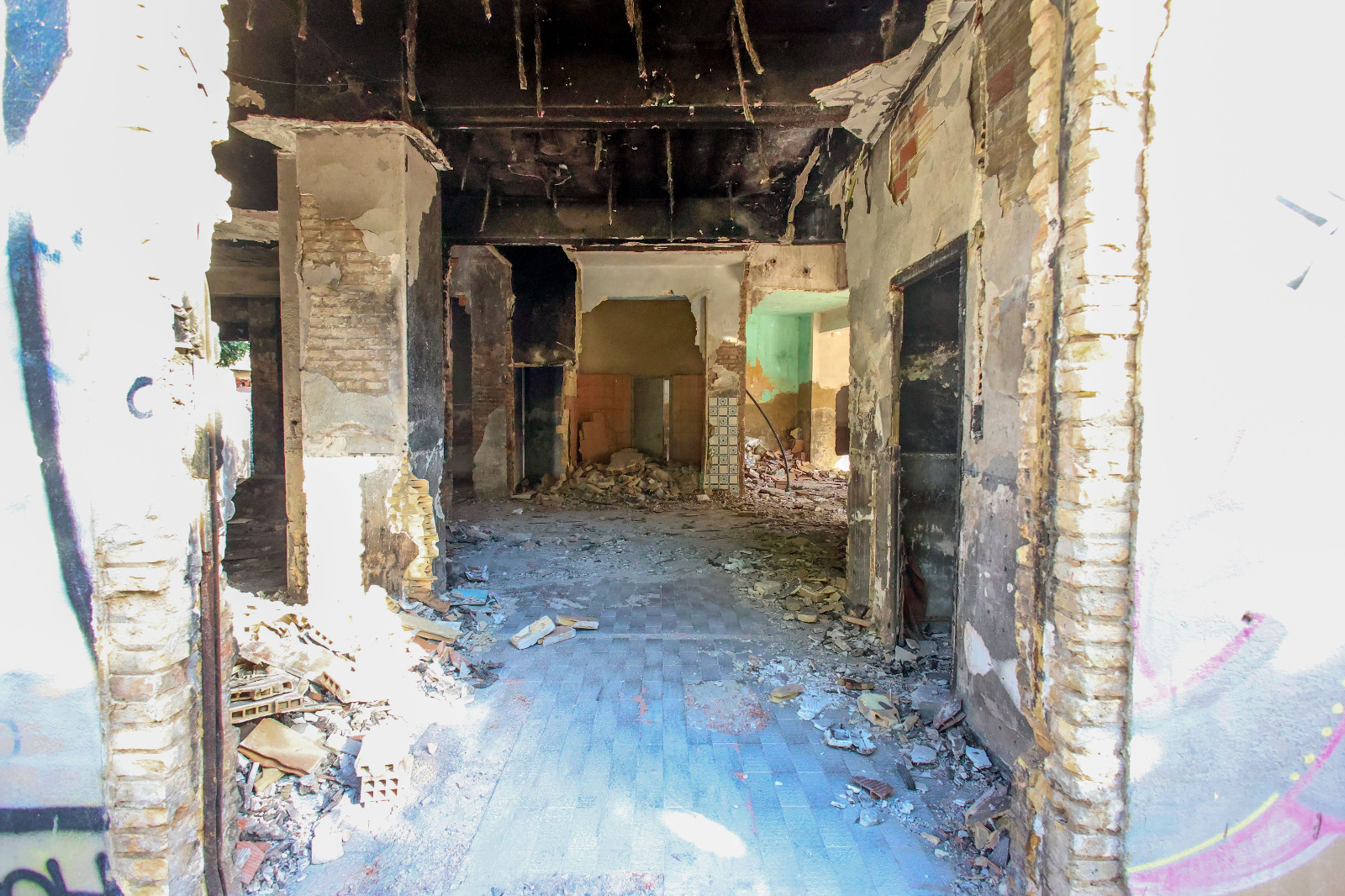
Preparing for the demolition proved no easy task. Asbestos was found inside (a popular building material that, when it breaks down, produces dangerous asbestos dust which, when breathed in, enters the body and stays there forever, since it cannot be dissolved by acids), and a colony of stray cats was living in the building itself. The animals were relocated to a safe place.
The asbestos panels were removed on days when the school was not in session, so as not to put at risk the pupils of the neighbouring Vilavella educational institution. After the materials had been removed, an independent assessment confirmed the absence of asbestos particles in the air — a mandatory condition for the start of the dismantling.
Around 200 tonnes of rubbish were removed from the building, including roughly 50 mattresses. In the first stage, the workers had to operate in protective suits because of the hazardous state of the load-bearing structures.
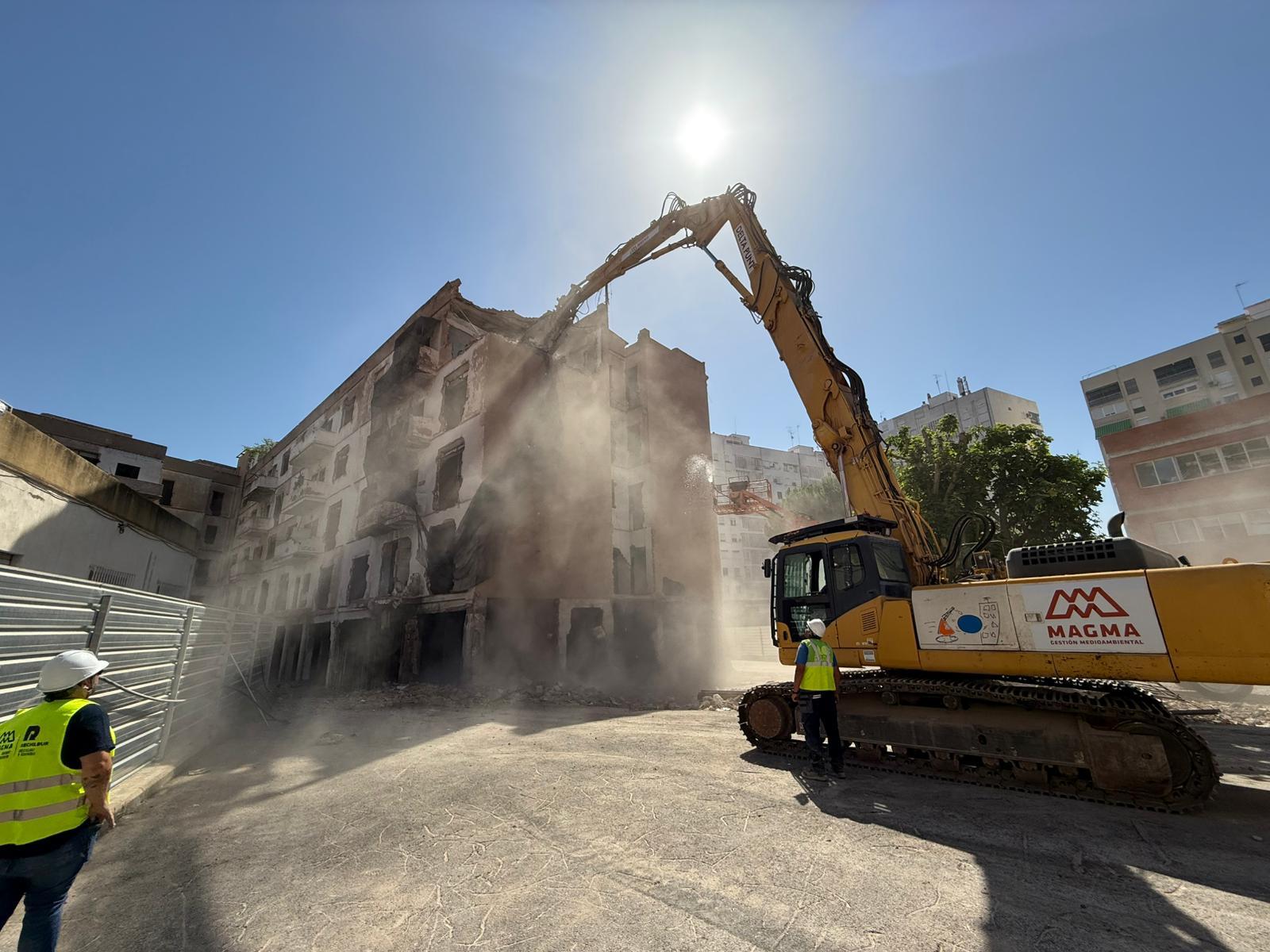
After the demolition, a plot of more than 12,000 square metres will be freed up, which for years had been occupied by abandoned structures, wasteland, and improvised car parks. The aim of the project is to transform this area into a new façade for the Pío XII avenue and improve the appearance of one of the key entrances to Valencia.
The project provides for the construction of 133 flats, some of them social housing, as well as new public spaces and around 3,000 square metres of green zones with two parks. In addition, there will be a service road along the Pío XII avenue, a 2.3-metre-wide cycle path, and systems for collecting rainwater. LED lighting and a sound-absorbing surface will also be installed. Part of the area will be left for a possible expansion of the school.
The demolition will take no more than three months. Once it is complete, landscaping works will begin.
Related Articles

Valencia Teenage Biker Group "Banda de los Caballitos" Sparks Alarm with Dangerous Viral Stunts
Las Provincias reports a group of teenagers — many underage and unlicensed — filming themselves setting fire to their clothing before jumping into the harbour, and staging street races to evade police patrols
Spain Could Face Its First Heatwave of 2026 This Weekend, with Temperatures up to 42°C
A high-pressure system over the Iberian Peninsula could push the mercury past 30°C almost everywhere on Saturday, with Córdoba and Badajoz expecting up to 42°C — though AEMET says it's too early to confirm
Loading…
Loading…