Support La Cotorra on Patreon
Access exclusive content, special perks, and closer connection with us.
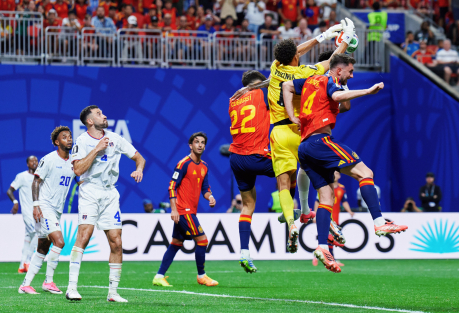
Some of the main favourites of the tournament began their 2026 World Cup campaign with wins: the reigning world champions of Argentina beat Algeria, and last World Cup's finalists, France, beat Senegal.
The sixth day of the planet's main football tournament was marked by the appearance on the pitch of the superstars who will battle for the title of the championship's top scorer. And they confirmed those expectations straight away. The leader of the French national team and star of Real Madrid, Kylian Mbappé, scored a brace; the forward of the Norwegian national team and Manchester City, Erling Haaland, also celebrated his World Cup debut with two goals; and the legendary Lionel Messi of Inter Miami instantly answered the question of his readiness by recording a hat-trick.
Before this match, journalists raised the subject of revenge for the French team's defeat by the Senegalese 24 years ago — back then, the "Tricolores," as reigning world champions, sensationally lost to the African side and subsequently failed to get out of the group. France's head coach, Didier Deschamps, however, dismissed all this talk, reasonably noting that many of his players had not yet been born when that match took place. Nevertheless, what happened on the pitch in the first half involuntarily recalled the events of that long-past game.
Didier Deschamps decided to depart from his usual formation, placing Bayern star Michael Olise on the right flank, although he had used him all season as a "number ten" in the centre, and left Ousmane Dembélé in the middle behind Mbappé. As a result, throughout the first half, French attempts to attack fell apart at the planning stage — the Senegalese successfully covered all the zones and broke away on fast counterattacks. One of these almost ended in a goal: after a shot by Nicolas Jackson, the ball hit the post, ricocheted off French goalkeeper Mike Maignan, and went out of play.
Realising this problem, Deschamps swapped Olise and Dembélé, which ultimately became the key to victory. Moving into the centre, [Olise] began time and again to crack open the Senegalese defence with penetrating passes to the onrushing Mbappé, which led to the first goal of the match. Eight minutes before the end of normal time, substitute Bradley Barcola increased the French lead with a beautiful chip. But the Senegalese quickly restored the intrigue: in the fifth minute of stoppage time, Mbaye fired a powerful shot past Maignan at the near post.
This hope, however, did not live long. Mbappé picked up the ball in the centre after Olise's attempt to dribble and shot unstoppably from long range, becoming the national team's top scorer with 58 goals, drawing level with Gerd Müller along the way and rising to third place in the history of World Cup scorers with 14 goals.
The second match in the day's programme was the meeting between Norway and Iraq. The main intrigue was how the star of the Scandinavian side and top scorer in three of the last four seasons of the English Premier League, Erling Haaland, would perform.
Norway took control of the game from the first minutes and began to build pressure on Jalal Hassan's goal. Nevertheless, it took the Norwegians half an hour to break the deadlock. Haaland, in his trademark style, burst into the six-yard box, responding to a cross, and scored his debut World Cup goal.
The Iraqis, however, did not crumble after this but, on the contrary, managed to equalise thanks to a powerful header from Aymen Hussein. But this draw lasted only four minutes — Jalal Hassan received a weak pass from a defender, came under pressure from Haaland, and tried to clear the ball, but it ricocheted off the Norwegian and into the net. Nevertheless, the Iraqis could have equalised right before the break — after a thunderous volley from Akam Hashim, the ball flew just centimetres over the crossbar.
In the second half, the Iraqis tried desperately to save the match, but Norway skilfully controlled the game and allowed almost no danger near their own goal. In the 76th minute, after a corner, substitute Leo Østigård headed in to settle all questions about the winner of this match. After that, Haaland could have completed his hat-trick but failed to beat Jalal Hassan in a one-on-one. And right at the very end, Kristian Thorstvedt, taking a knock-down from Haaland himself, forced the Iraqi defenders to put the ball into their own net.
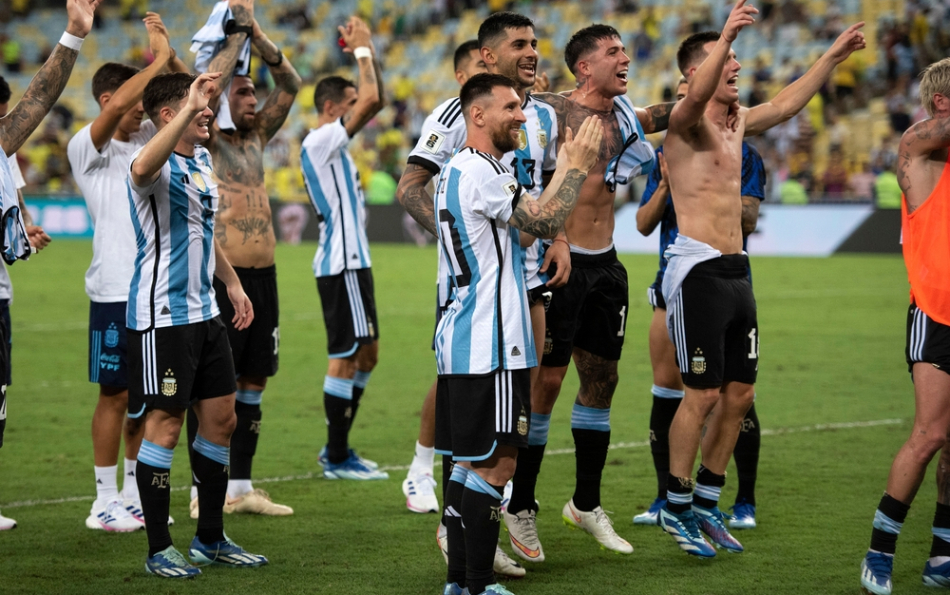
Next onto the pitch in Kansas City came the reigning world champions of Argentina and the team of Algeria. All the attention, of course, was fixed on Lionel Messi, for whom this World Cup was his sixth — before him, no footballer had managed to take part in so many of the planet's main football tournaments. It's worth noting that today, another football legend and his long-time rival, Cristiano Ronaldo, may also match this record, but by the will of the calendar, the Argentine did it a day earlier.
The Algerians' starting line-up unexpectedly did not include their captain and attacking leader, Riyad Mahrez. The team's head coach, Vladimir Petković, decided to bet on a more dynamic attacking trio — Anis Hadj Moussa, Ibrahim Maza, and Amine Gouiri — although the decision looked surprising, given that in the friendlies before the tournament the team had beaten the Netherlands (1–0) and thrashed Bolivia (4–0) with Mahrez in the starting line-up.
The start was fiery — in the first ten minutes, the teams exchanged goals, but both times they were ruled out for offside. After that, the game levelled out: the Algerians clung to the ball and tried to trouble Argentina's defence through the flanks, while the South Americans methodically probed for the opponent's weak spots. Almost all of Argentina's play was built around Messi, and in the 17th minute, this bore fruit: Rodrigo De Paul found Leo with a long pass through the centre of the pitch, he broke into the box at speed and shot precisely into the corner.
In the second half, the difference in class became more obvious. After a not particularly difficult shot from Alexis Mac Allister, Luca Zidane, son of the legendary Zinedine Zidane, parried the ball straight to Messi and practically gifted him a second goal. And closer to the end of the match, Nicolás González laid the ball off to Leo at the edge of the box, and he, with a precise shot into the bottom corner, ended the evening with the first World Cup hat-trick of his career. This result allowed him to draw level with the record of Germany's Miroslav Klose — 16 goals at World Cups. However, the Argentine is unlikely to stop there.
Although none of this might have happened, between the second and third goals, in the episode with a rough tackle on Aïssa Mandi, the referee could have shown Messi a yellow or even a red card, but limited himself only to a free kick. In the end, in the 80th minute, Argentina's head coach Lionel Scaloni substituted the hero of the match, and the whole stadium saw Leo off with applause.
Related Articles
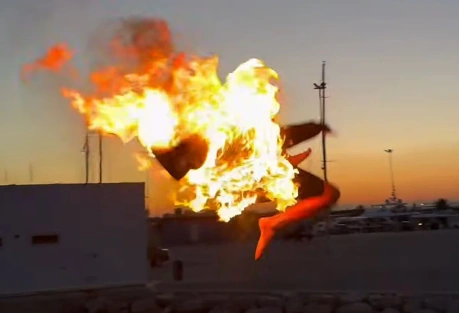
Valencia Teenage Biker Group "Banda de los Caballitos" Sparks Alarm with Dangerous Viral Stunts
Las Provincias reports a group of teenagers — many underage and unlicensed — filming themselves setting fire to their clothing before jumping into the harbour, and staging street races to evade police patrols
Spain Could Face Its First Heatwave of 2026 This Weekend, with Temperatures up to 42°C
A high-pressure system over the Iberian Peninsula could push the mercury past 30°C almost everywhere on Saturday, with Córdoba and Badajoz expecting up to 42°C — though AEMET says it's too early to confirm
Loading…
Loading…