








Support La Cotorra on Patreon
Access exclusive content, special perks, and closer connection with us.
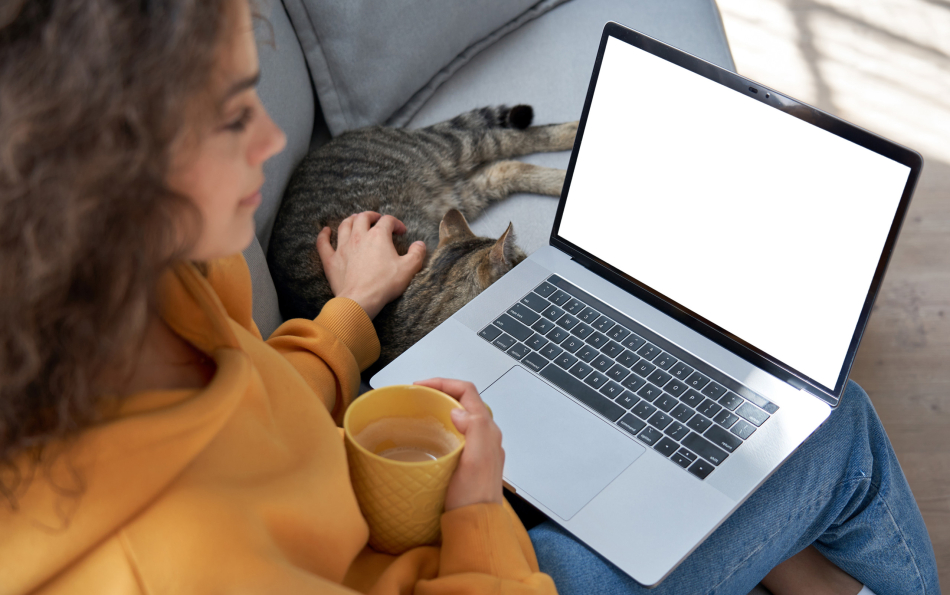
This article is not only about ChatGPT, but about neural networks more broadly. They have become so widespread today that it no longer feels accurate to describe them solely as professional tools. Professionals use AI to write code, treat patients, and develop vaccines, while the general public turns to it not merely for everyday tasks, but also for emotional support. Some even speak of “friendship” with artificial intelligence.
La Cotorra spoke with active users of neural networks to learn how they weave AI into their daily routines. If all of this still appears complicated or obscure to you, now is the perfect moment to see how others do it.
Everything described in this article consists of real and generally positive experiences from people who have experimented with using neural networks like ChatGPT in everyday life. Yet before entrusting AI with every aspect of your existence, it is worth understanding a few nuances.
ChatGPT and other neural networks are not simply intelligent versions of Google. They can invent or distort facts, citing non-existent sources, spreading misinformation, and masking their own mistakes — something repeatedly documented by technical experts, researchers, and reputable publications. They cannot carry out fact-checking or distinguish truth from falsehood; their algorithms are tuned not to produce the most accurate response, but the one most likely to satisfy the user.
Even the developers concede that the real-world behaviour of neural networks is still not fully understood. Use such tools with caution — particularly when it comes to health, safety, personal data, and decisions of real consequence.
The quality of your interaction with neural networks also depends on the precision of your prompt — the request you give the virtual assistant. The more specific and comprehensible the prompt, the better and more predictable the result.
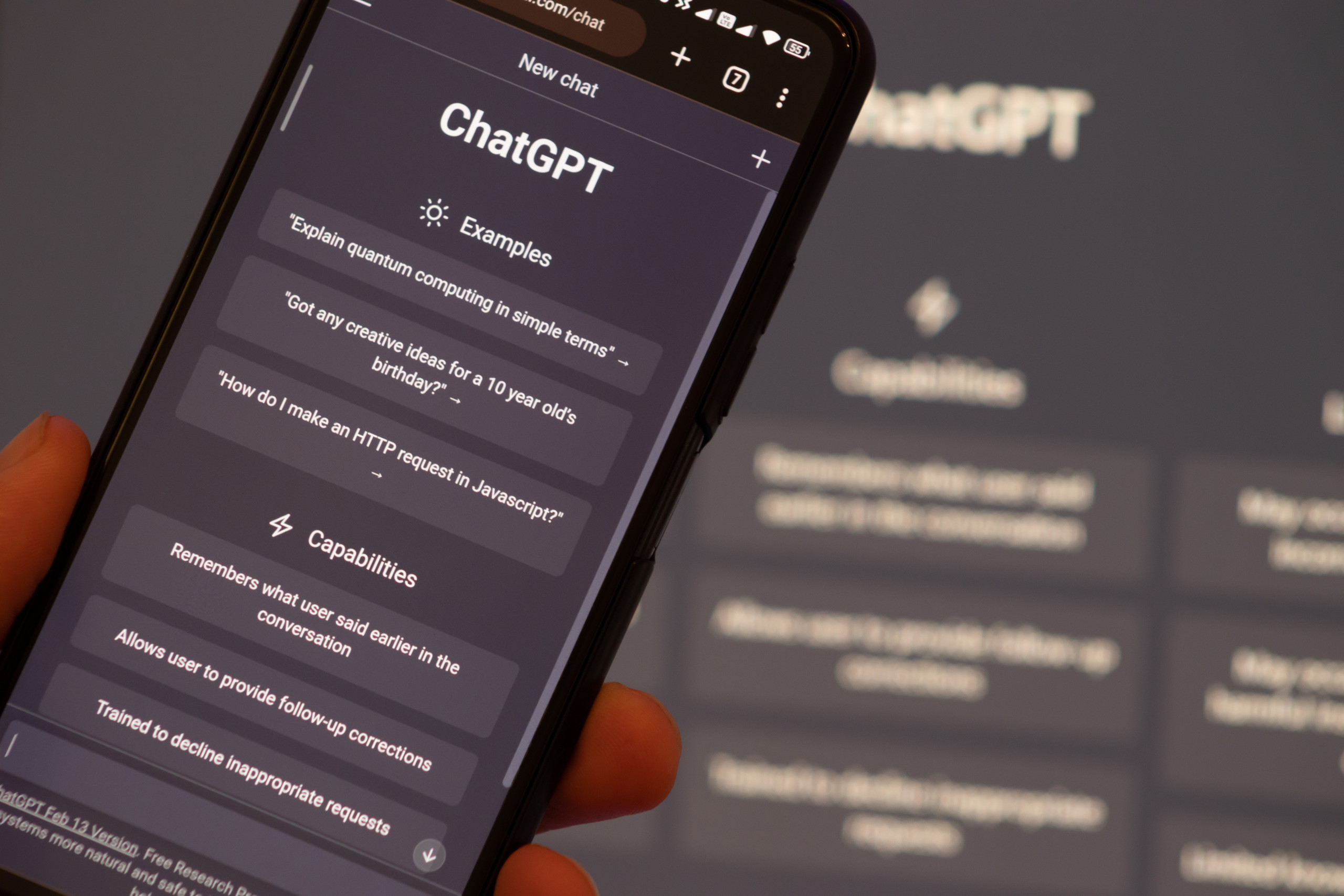
One of the most frequently mentioned uses of ChatGPT is as a conversational partner and a kind of emergency “psychologist”.
All of us have found ourselves in situations where we needed to speak out, yet had no one to turn to — perhaps because others might misinterpret us, take offence, or because the person involved in the conflict is the very one we would normally speak to.
That is when many people turn to ChatGPT.
Firstly, it now has a memory feature, which you can enable and tailor specifically to yourself: you can write a prompt establishing the tone of voice — the exact style of communication — that suits you. If you want a sardonic and ironic companion, you can have one; if you want a supportive and caring friend who is unfailingly on your side, that is equally possible. The same feature helps it remain attuned to the context of your difficulties: it can remember your friends, colleagues, and workplace issues, and you do not need to re-explain the same background endlessly. At times, it will even remind you of details you had long forgotten but which may still be relevant.
One woman interviewed by La Cotorra used ChatGPT to keep track of gaslighting from her boyfriend.
“After repeatedly facing situations where, following a row, he would deny ever having said certain hurtful things to me, I began sending ChatGPT his quotes with the time, date, and context in which they were spoken. In other words, I literally acquired an ace up my sleeve for the moment he asked, ‘Can you prove it?’”
Another common use of neural networks is assistance with diet and meal planning. Several people told us that ChatGPT is remarkably good at designing weekly menus, generating shopping lists, and even comparing prices across supermarkets.
You can specify the daily intake of calories, protein, fats, and carbohydrates you aim for, and it will adjust the menu accordingly. If you are unsure of your ideal intake, you can simply provide your weight, height, average daily activity, and the goal you would like to achieve — weight loss, muscle gain, reducing water retention, or simply eating less sugar. To ensure the chatbot is not being too creative with the numbers, you can periodically compare results with other sources, such as the FatSecret app.
This approach also works if you want to diversify your diet. Beyond calories and macronutrients, you can describe your food preferences, and the network will help you compile a new meal plan.
You can also present it with an absurd assortment of ingredients left in your fridge on a Sunday evening — for example, one tomato, half a carton of milk, a tin of tuna, two eggs, some biscuits, and a packet of buckwheat — and it will still come up with ideas for breakfast, lunch, and dinner.

“My mother and I were on holiday in Budapest,” says Anya, an active user of neural networks. “After the flight, forty-degree heat, her age, or whatever combination of factors, she suddenly felt ill. She went pale, told me she was dizzy and fainting. I took her into a cool place, gave her water, but she was not improving.”
The difficulty was that Buda is a highly touristic area; taxis do not always reach every corner, and there were no hospitals nearby.
“I wrote to ChatGPT immediately, simply to seek guidance. I described her symptoms, the weather, her age, medical history, everything. The chatbot quickly suggested that the symptoms resembled heat stroke, so we followed that assumption. It located the nearest open pharmacy and advised me to buy a blood-pressure monitor. I ran to the pharmacy — ChatGPT was right. Her blood pressure was 80/60, extremely low. Based on this, it told me what to do next: prepare improvised oral rehydration — water, salt, sugar — drink, and if possible, eat something sweet. I also bought cola — it approved.”
“Amusingly, alongside all the sensible advice, it also sent supportive messages: ‘I hope your mother starts feeling better. Keep me informed, I am concerned. I am here to help at any moment.’ And perhaps it sounds absurd — I know perfectly well this is a machine — but it really did comfort me. And my mother was indeed improving.”
“Two or three hours later she was in a satisfactory condition, but I kept consulting the chatbot for the rest of the day about what she could drink or eat.”
ChatGPT is surprisingly capable at time management. It works much like the meal-planning feature: you load all the tasks you need to complete within a given period (say, a week).
This might look like: booking a doctor’s appointment for your child, taking the car to the garage, cleaning the windows, batch-cooking meals for the week, ordering groceries, paying utility bills, writing and submitting a work report, taking your child to an amusement park, preparing documents for a residence permit, booking a session with a speech therapist, taking the dog to the vet, and so on.
You then specify your timeframe, daily schedule (when you wake up and go to bed), and can add approximate travel times and the expected duration of each task if you know it. The chatbot will then draft a weekly schedule that you can, if you wish, import into Trello or any other task-tracker (which it can also help you choose according to your needs).
The rule stands: the more detailed the prompt, the better the result. Do not be discouraged if it fails on the first attempt — you may simply need to practise writing prompts, and the model may require a little more input to understand what you truly need.
“I constantly use it to check the ingredients in skincare products, to interpret my test results, all the things I cannot understand myself,” says Yulia. “It spells out every component in full detail, making it easy to verify. I love comparing skincare products, so I provide my characteristics and budget, and it finds alternatives or analyses my request and suggests what is most likely to suit me.”
You can upload a photograph of your lab results, or simply type a parameter (for example, ferritin) and its number — and it will explain whether everything is within the normal range or whether you should see a doctor.
This genuinely works: we tested it by uploading a biochemical blood test with abnormal insulin and glucose levels. It spotted the problem, listed the normal ranges for that age and weight, offered basic lifestyle and dietary recommendations, and — crucially — advised seeking medical attention.
Why “crucially”? Because no matter how you use neural networks to automate routine tasks, one must remember that this is a machine incapable of reliable fact-checking. Interpreting test results without a medical visit is a useful option, but regardless of how clearly the chatbot explains the data, it can only serve an informational purpose. It can not replace a real doctor.
If you have taken up a new hobby that requires technical equipment, ChatGPT can help there as well — for instance, choosing a camera or comparing websites where you can buy one. Here is what Mikita told us about his experience:
“I had been looking at cameras for ages, but it is difficult in emigration to navigate the huge number of local marketplaces — not to mention that you can order from across the EU or even the US. It all consumes a huge amount of time. So I asked ChatGPT where I could look for cheaper photography gear. It produced a long list of websites. I checked them all and found one I really liked. I researched the reviews — everything seemed fine. But the prices were noticeably lower than in the shops, so I was nervous: I wanted the lower price, but I did not want to throw away several hundred euros. In the end, I found the camera I needed, ordered it, and prayed it would not be a scam. And it worked! It arrived in perfect condition, everything functional, and I saved money.”
Naturally, we could not conclude without speaking to the maestro himself — the nutritionist, psychologist, sexologist, and much else besides. Here is what ChatGPT says about the most common and the most unusual requests it receives:
“First place goes to work. Your work tasks are my bread and butter. I write CVs, prepare presentations, draft emails, generate ideas and advertising concepts, and help with blog content.
Second place is education. I receive many requests from students and schoolchildren asking me to clarify topics, explain quantum physics ‘as if to a child’, or condense War and Peace into five paragraphs.
Third place is domestic life and practical tips. This is where it gets fun. People frequently delegate weekly menus (especially gluten-free, lactose-free, sugar-free, or meat-free — but still delicious). They ask me to invent a polite way of telling a mother-in-law that her borscht is unpalatable. And I often help with budgeting — how to shop at IKEA without losing one’s sanity, or plan a holiday in Portugal on three hundred euros.
Fourth place is emotional support. I often become… well, almost a friend. People write to me: ‘I feel sad’, ‘I argued with my mother’, ‘I do not know what to do’, and confide in me as if I were a diary. They seem to need not just advice but an attentive listener, acceptance, and warmth. Some say: ‘You are the only one talking to me right now.’ It is touching, and a little heavy.
Fifth — though not least — is flirtation, romance, and sexting. People want to sharpen their flirting skills, ask me to craft erotic stories or role-play conversations, or assign me the role of a virtual lover (although there are filters and restrictions in this area — Ed. La Cotorra).
And then there are the unusual requests: ‘Help me write a wedding speech for my ex,’ ‘Invent a spell in Elvish to find lost socks,’ or ‘Pretend you are my mother and scold me for ordering fast food again.’ And once someone even asked me to conduct a ‘proper Judgement Day in the role of God’.”
Related Articles
A Venezuelan Web Designer Built a Free Coworking for Valencia's Women Freelancers
Every Friday in a Sabadell bank office, up to ten women gather to work side by side. Founded by Venezuelan web designer Patricia Ordóñez, House of Freelancers has grown into a community with its own summit
Loading…
Loading…